


One of the most common misconceptions about stainless steel is that it doesn’t rust or corrode. While stainless steel is known for its excellent corrosion resistance, it is not completely immune to corrosion.
So, what makes stainless steel corrosion-resistant, and why can it still show signs of rust?
What Makes Stainless Steel Corrosion-Resistant?
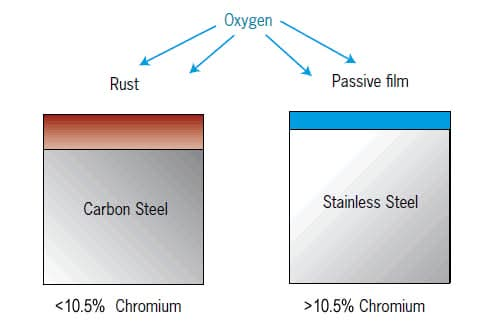
Stainless steel contains chromium, which reacts with oxygen to form an extremely thin, protective chromium oxide layer on its surface. Known as the passive layer, it helps protect the underlying metal from corrosion. For the passive layer to form, there needs to be a minimum of 10.5% chromium.
If this layer is damaged, it can naturally reform when the right conditions are present. This protective mechanism is what gives stainless steel its corrosion-resistant properties.
Why Can Stainless Steel Still Corrode?
Certain environmental and operating conditions can compromise the protective passive layer.
Common causes include:
– Chloride exposure: Saltwater, coastal environments and certain chemicals can contribute to localised corrosion.
– Surface contamination: Contact with carbon steel particles during cutting, grinding or fabrication can cause surface rust.
– Poor maintenance: Dirt, deposits and trapped moisture can create conditions that encourage corrosion.
– Incorrect material selection: Not every stainless steel grade is suitable for every environment or application.
Corrosion can appear as surface staining, discolouration or pitting corrosion, where small holes or cavities develop on the metal surface.
How Can Stainless Steel Corrosion Be Prevented?
Choosing the correct stainless steel for the application is essential. Good handling, fabrication and maintenance practices also make a difference.
Some important considerations include:
– Selecting a suitable stainless steel grade for the operating environment.
– Preventing contamination from carbon steel during handling and fabrication.
– Keeping surfaces clean and free from deposits.
– Using appropriate cleaning, pickling and passivation processes where required.
Understanding Stainless Steel
Stainless steel offers excellent corrosion resistance, but its performance depends on the material, the environment and how it is handled.
For those wanting to develop a deeper understanding of stainless steel, its properties, applications, corrosion mechanisms and correct handling, the Southern Africa Stainless Steel Development Association (SASSDA) offers various training and educational programmes.
Visit https://www.sassda.co.za/ to explore their training opportunities and technical resources.
Contact Euro Steel for all your Stainless Steel Requirements
At Euro Steel, we supply a comprehensive range of stainless steel products for diverse industrial requirements.
Need assistance with your stainless steel requirements? Contact the Euro Steel team.
Euro Steel – A proud part of AFMETCO.
Frequently Asked Questions
Can stainless steel “rust”?
Yes. Stainless steel can rust under certain conditions, particularly when exposed to chlorides, surface contamination or unsuitable operating environments.
Does stainless steel rust in coastal areas?
It can. Salt and airborne chlorides can contribute to corrosion, particularly if the stainless steel grade is not suited to the environment.
Does cleaning stainless steel prevent corrosion?
Regular cleaning helps remove contaminants and deposits that can contribute to corrosion. Appropriate cleaning and maintenance practices help preserve the protective passive layer.